How Revolut uses sound to beat traditional banks
February 03, 2026
Why Revolut’s sound strategy works
It might surprise you that one of the most resonant audio brands in recent years belongs to a fintech bank. Historically, traditional banks didn’t need to prioritize advertising as their identities were well-established. The growth of Revolut has been one of the fastest in Europe and their success could be down to their regular social media ads or the use of influencers in their campaigns, but we believe there’s something deeper at play.
In the digital age, companies can primarily influence two senses: sight and sound. As most major banks have already established strong visual identities, the logical step for a new bank looking to break through would be to establish a strong sound. By leveraging audio branding, Revolut has created a memorable and cohesive identity that resonates with consumers.
What makes Revolut’s sonic branding effective?
A three-note melody followed by a synth is all they need to perfectly communicate their brand identity. The simplicity and tonality of the melody, combined with a snappy synth that resolves satisfyingly displays the ‘modern but safe’ identity of the brand. The technological timbre furthers this modern angle. The whole sound tells consumers, “We are the full package.” There’s no cliffhanger or uncertainty by the time it concludes.
We see this audio logo be extended into commercial tracks for advertisements that keep the ‘fintech’ focussed themes that are developed in the logo. The beauty of music is that it defies language barriers. The audio logo is the same wherever you go, and this has supported Revolut’s success globally. They operate in over 35 countries with a variety of languages, and translating every brand message/ social media post requires significant resources. Their audio logo remains identical everywhere, building a cohesive global brand identity that transcends linguistic boundaries.
Adapting sound identities
To gain this level of trust within the banking industry, they wanted to balance their natural brand identity with that of traditional banking. How can a brand change their image so quickly without losing their core identity, you may ask. A clever trick within audio branding is to make variations of the main audio logo that keep the core melody and rhythm.
They opted for a more classical approach that focussed on the piano. It’s like having a variation of your visual logo that is cleaner and more traditional, except far less on the nose.
To accentuate this calculated shift, the full commercial track even cuts away from their ‘tech based’ style, allowing the piano to be heard and processed with a point of reference. Revolut know what they have to sound like, depending on context.
This level of audio branding awareness showcases creativity and brand understanding that is not often seen in the banking sector. It is also something that stock sounds can never replicate. Capturing your entire identity within five seconds is rare, but understanding how you should sound dependent on the context is something special.
The psychology behind effective audio branding
When customers can’t interact with you face to face, trust becomes the primary barrier to adoption. Sound provides a psychological anchor that creates familiarity and reliability. Every time a user hears the Revolut audio logo, their brain reinforces the association with safety.
Audio processing happens faster than visual processing in the human brain. Sound triggers emotional responses in milliseconds. For fintech companies competing for attention in a saturated market, this speed advantage is crucial.
The role of UI sound design in banking apps
Revolut has not only developed a recognizable audio logo; they have also enhanced their user experience (UX) through mobile banking sounds. Online banking is interactive, with many junctions that can be improved through audio.
Banking apps contain dozens of micro-interactions daily. Each moment is an opportunity to reinforce brand identity through sound. UI sounds serve critical functions in banking:
• Confirmation & reassurance – Transaction sounds provide instant feedback: “Your payment went through.” This is especially critical for banking, where anxiety about errors runs high.
• Error prevention & alerts – Different sounds for different actions help users navigate without constant visual engagement. A distinct sound for incoming vs. outgoing payments allows a much more intuitive process
• Gamification & engagement – When users reach savings goals, celebratory sounds trigger dopamine releases, transforming mundane financial management into an engaging experience.
• Brand consistency – Every UI sound ties back to the core audio logo’s sonic palette, creating a cohesive ecosystem that users subconsciously recognize.
Revolut understands that the shift to digital banking requires users to feel in control. Clarity in key moments is vital, and utilising sound to communicate important junctions allows users to focus without being bombarded by visual distractions.
UI sound further accentuates brand cohesion while adding tactile elements to the process. Online banking can often lack the assurance that actions have been processed, but sound provides the clarity and tangibility reminiscent of traditional banking.
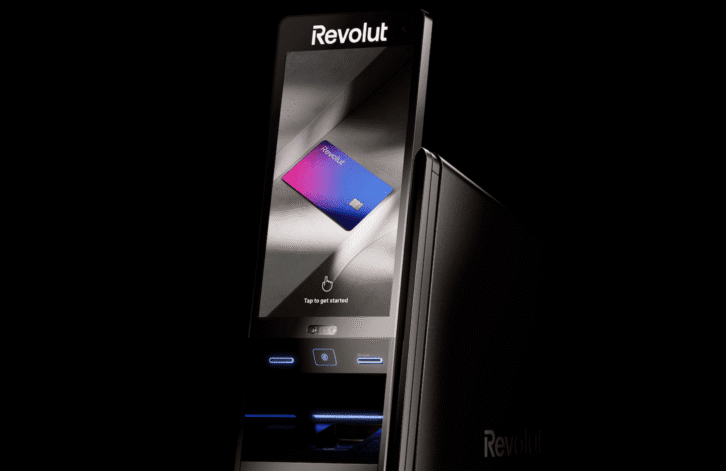
Revolut has also begun to extend past their digital-only presence, with an aim to roll out branded ATMs with the ability to dispense cards as well as cash, introducing a new wave of touchpoints that can be enhanced through sound.
Can competitors copy Revolut’s audio branding?
So it’s that easy! Competitors should just go for Revolut’s sound? Well it’s not that straightforward. Their audio identity works because it is inherent to their brand DNA. More traditional banks won’t find success with this approach, as consumers don’t associate them with such an identity. This is why the strategy behind audio branding is crucial. Even if you believe you have your identity sussed out, it often goes a lot deeper than three or four ‘brand attribute’ words. It takes an external examination of you, your competitors and your product to truly figure out who you are.
No two audio brands should sound alike because no two brands are the same. It’s like trying to mimic someone else’s visual logo. Despite the questionable legality of this approach, it simply wouldn’t work because your visuals would not reflect your brand, and consumers can sense this immediately. Many modern rebrands to generic aesthetics have led to a loss of brand affiliation, and the same is true for sound.
When we collaborated with Turkish fintech company Papara, we aimed to help them stand out against competitors while remaining true to their unique brand DNA. The process of developing a sonic brand starts with deep brand introspection: What emotions should customers feel? What differentiates you from competitors? At Sonic Minds, we aim to evoke what this might mean for you
How other banks are adopting sonic branding
While Revolut has been a pioneer, they’re not alone. N26 uses subtle UI sounds emphasizing minimalism. Monzo employs playful notification sounds aligning with their friendly brand. Mastercard introduced their sonic brand identity in 2019, used across payment terminals and advertising. Even traditional banks like JPMorgan Chase and Bank of America have developed proprietary UI sounds, moving away from generic system tones.
The trend is clear: as banking becomes increasingly digital, sonic branding has shifted from “nice to have” to an essential competitive advantage.
Key takeaways
It’s no surprise that banks like Revolut have seen a surge in users seeking accessible ways to manage their money. They utilize sound as a tool to instill consumer assurance and enhance the online banking process.
For companies aiming for the ‘Revolut effect’ in the banking industry, it’s not as simple as copying existing strategies. Your brand DNA will, and should, sound different from your competitors. At Sonic Minds, we help evoke what this means for you and translate it into sound that is effective and unique to your brand identity.
